
Quick answer
Milongas in Buenos Aires occur nightly at various venues throughout the city, typically beginning between 18:00 and 23:00 and continuing until the early morning hours. There is no single permanent address or entrance fee because a milonga is a type of event, not a venue. Dancers navigate between neighborhoods like Almagro, Palermo, and Villa Urquiza depending on the orchestra, organizer, and style of dance favored that evening.
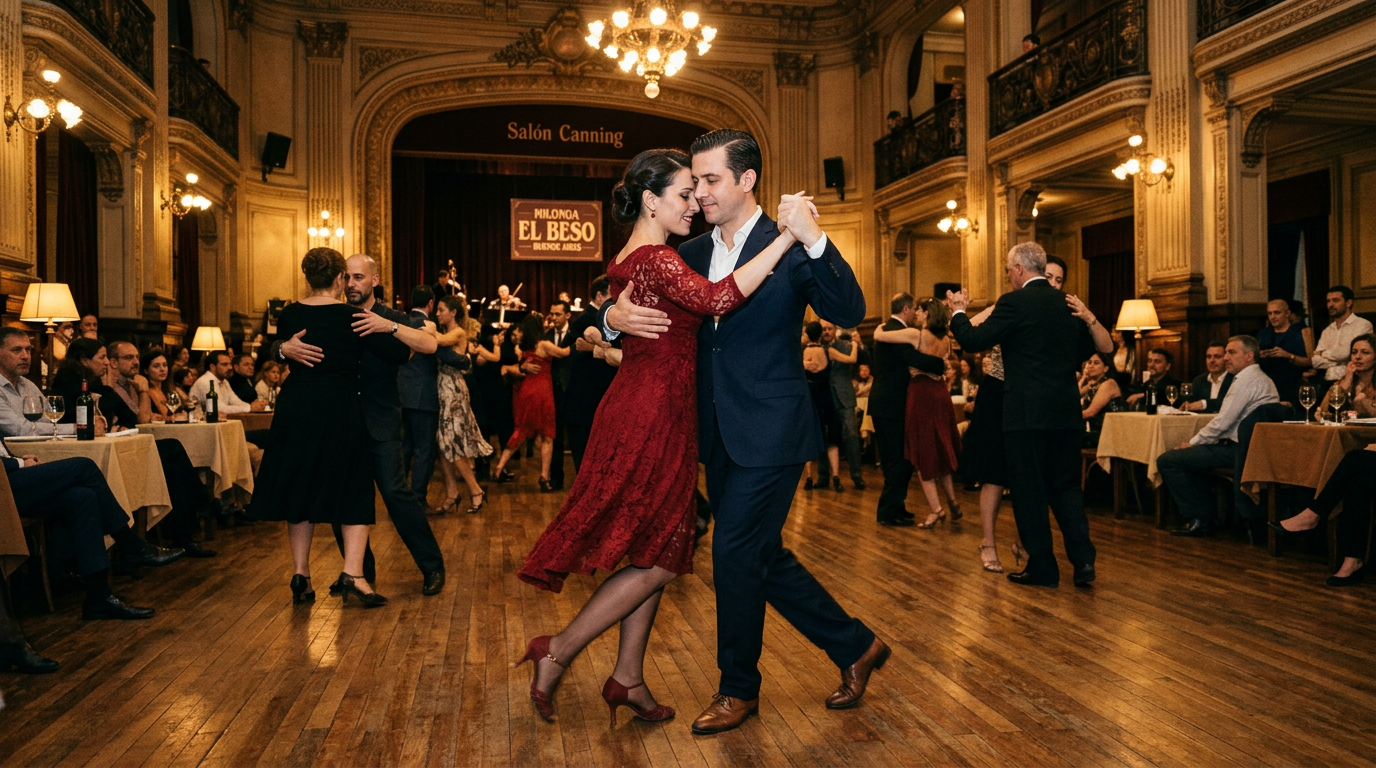
Buenos Aires hosts more than two hundred milongas each week, distributed across salons, cultural centers, and private clubs that open their doors to dancers after sunset. The term milonga carries three meanings in porteño culture: the event itself, the musical style that predates tango, and the venue where dancers gather. Tonight's milonga buenos aires hoy calendar includes encuentros milongueros in Almagro, milongas con orquesta típica in Villa Urquiza, and práctica sessions in Palermo designed for dancers refining specific techniques. Each milonga operates within a system of códigos developed over a century of social dance. The cabeceo—a subtle nod and eye contact between partners—replaces verbal invitations on traditional floors. The ronda, the counterclockwise flow of couples around the perimeter, governs navigation and collision avoidance. Tandas organize the music into sets of three or four songs separated by cortinas, musical breaks signaling the moment to thank your partner and return to your seat. Violating these códigos, particularly cutting across the ronda or declining a dance after accepting eye contact, marks a dancer as inexperienced or disrespectful. Finding tonight's events requires consulting aggregator sites like hoy-milonga.com, which compile daily schedules, or joining WhatsApp groups where organizers post last-minute updates. Villa Urquiza hosts milongas known for spacious floors and close-embrace dancing. San Telmo attracts tourists and locals to historic venues like Salón Canning. Boedo and Parque Patricios draw dancers seeking neighborhood authenticity away from the centro turistico. Some milongas feature live orquesta típica; others rely on tanderos, DJs who curate recorded golden-age tango from the 1940s. The atmosphere shifts depending on the day. Sunday afternoon matinee milongas attract families and older dancers. Friday and Saturday late-night events in Palermo draw younger crowds experimenting with nuevo tango and alternative music. Midweek milongas in residential neighborhoods maintain the strictest códigos and the most traditional repertoire, preserving the culture that shaped porteño identity across generations of dancers.
“The cabeceo—a nod and eye contact between partners—replaces verbal invitations on traditional floors, preserving the códigos that have governed Buenos Aires dance culture for more than a century.”
Best Arrival Window for a Milonga Buenos Aires Hoy
The best arrival window for a Milonga Buenos Aires Hoy is between 18:00 and 23:00. This period aligns with the rhythmic transition from early classes to late-night social dancing.
Early Evening
Low attendance—
The environment is quiet with classes often preceding the main event.
Night Peak
High attendance—
The dance floor reaches capacity as local dancers arrive for social rounds.
Late Night
Moderate attendance—
Crowds begin to thin providing more space for experienced dancers.
Verdict: Arrive between 18:00 and 23:00 to experience the full transition from instructional sessions to peak social dancing.
Weekly Schedule and Opening Hours for Milonga Buenos Aires Hoy
Milonga is a dance event type held at various locations across Buenos Aires, rather than a single permanent venue with fixed operating hours. Because each venue manages its own schedule, visitors should consult the official calendar for specific daily listings.
| Monday | Closed | |
|---|---|---|
| Tuesday | Closed | |
| Wednesday | Closed | |
| Thursday | Closed | |
| Friday | Closed | |
| Saturday | Closed | |
| Sunday | Closed |
Getting to Your Selected Milonga Buenos Aires Hoy
Since milongas are hosted at various locations across Buenos Aires, Argentina, travel logistics depend on your specific destination. The city features an extensive public transit network accessible via the SUBE card.
Subte lines A, B, D, E, or H to central stations
Colectivo network throughout the city
Licensed Radio Taxi or ride-sharing apps
Local streets within neighborhoods like San Telmo or Almagro
Preparation Checklist for Milonga Buenos Aires Hoy
Milongas happen at different venues across Buenos Aires, so preparation depends on where you're headed.
-
Check the venue and date in advance — Milongas rotate locations and schedules throughout the week.
-
Confirm dress code for the specific milonga — Some traditional milongas expect formal attire, others are casual.
-
Bring appropriate dance shoes — Leather-soled shoes are standard; street shoes can damage floors and hinder movement.
-
Arrive during the suggested evening window — Most milongas begin between 18:00 and 23:00 and run late into the night.
-
Learn basic tango etiquette and codigos — Traditional milongas follow specific invitation and floor navigation customs.
-
Carry small bills for entry fees — Many venues operate on a cash-only basis with modest cover charges.
Check availability
Frequently asked questions about milonga buenos aires hoy
Everything you need to know about milonga buenos aires hoy